
Safe anchoring: Why cracked concrete Is crucial when selecting the right anchor
Cracks in concrete do not necessarily indicate damage. For planners and installers, the key question is whether a fastening is installed in cracked or uncracked concrete. This distinction directly affects anchor qualification, design and the selection of a suitable product.
Cracked concrete is a normal design condition
Concrete is very effective at resisting compressive forces, but its ability to resist tensile stresses is limited. Cracks can therefore occur in the tension zones of a concrete member under certain load conditions. With proper structural design, these cracks are taken into account: they distribute across the member and their width remains controlled through the design of the structure.
“Cracked concrete” does not therefore automatically mean that a structure is damaged or unsafe. It first describes a physical condition within the concrete that needs to be considered when designing and selecting anchors.
What does this mean for anchoring?
An anchor must be able to transfer loads safely into the concrete even when a crack is present in the anchorage zone. A crack can influence the way an anchor works – for example, its load transfer, expansion mechanism or bond with the concrete. This is why cracked concrete is an important criterion in the testing and qualification of anchors, as well as in their later design.
For planners and users, the practical point is clear: the fastening solution must match the actual installation conditions. If cracks cannot be reliably ruled out, anchors approved for use in cracked concrete and suitable for the intended application must be selected.
MKT solutions for different requirements
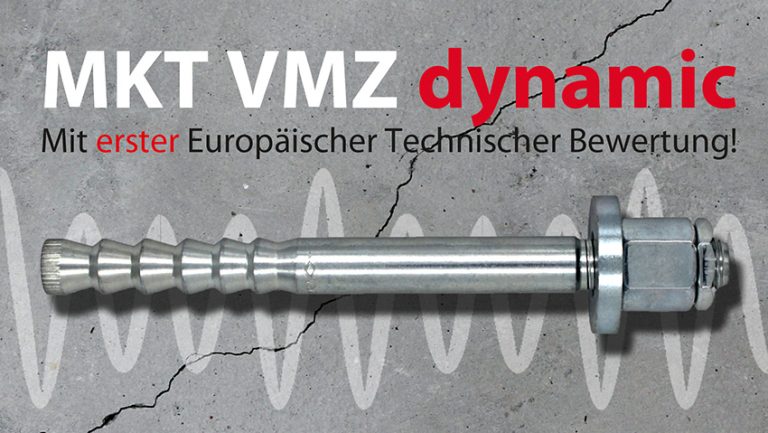
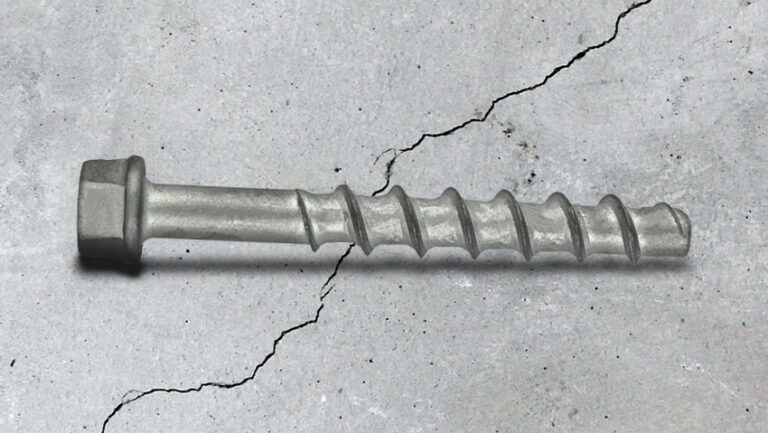
MKT provides fastening solutions for a wide range of base materials, loads and installation conditions. This includes approved MKT anchors and anchoring systems assessed for applications in cracked concrete. These products are designed to accommodate the expected crack conditions and transfer the resulting loads safely into the structure – provided that product selection, design and installation follow the relevant approval.
Not only anchor type and diameter are critical for the design. Concrete strength, crack condition, embedment depth, edge distances, spacings, load direction and installation conditions also affect the load-bearing capacity. The European Technical Assessment (ETA) for the relevant product provides the applicable performance values and conditions of use.
The right decision starts in the planning phase
Clarifying at an early stage whether cracks may occur in the concrete creates the basis for safe and cost-effective anchoring. The appropriate MKT solution can then be selected and designed as part of the planning process, rather than being decided on site.
This turns a potential uncertainty into a defined design condition: cracked concrete is a normal characteristic of the material and with a suitable, approved anchor, it can be reliably taken into account.
The ETA of the MKT product used, the conditions of use specified in it and the applicable design rules are always decisive.
17.09.2026